
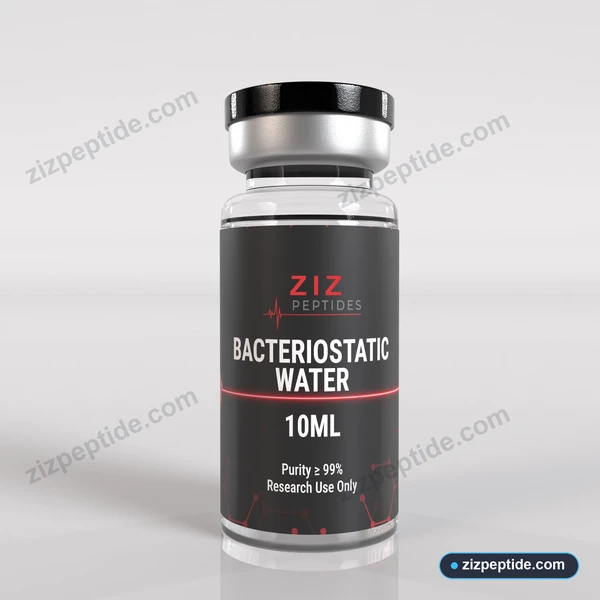
Peptide reconstitution is a delicate laboratory procedure requiring sterile technique and accurate volumetric measurement. Synthetic research peptides are delivered across Europe by ZizPeptide Europe in lyophilized (freeze-dried) powder cakes to ensure maximal stability during transit.
Selecting the Appropriate Reconstitution Diluent
For research applications requiring multi-day withdrawal from the same vial, Bacteriostatic Water 10 mL (0.9% benzyl alcohol) is the European laboratory standard because it inhibits microbial replication. For cellular assays sensitive to alcohol preservatives, sterile 0.9% Sodium Chloride (saline) or sterile water may be substituted for immediate single-use testing.
Preventing Mechanical Shear Stress
Synthetic polypeptides such as BPC-157 & TB-500, Retatrutide 10mg, Tirzepatide 10mg, or Semax 10mg possess delicate secondary and tertiary structural conformations. When adding diluent:
- Never inject the stream of liquid directly onto the lyophilized powder cake.
- Aim the needle against the inner glass wall of the vial and allow gravity to guide the Bacteriostatic Water slowly down.
- Gently swirl the vial with a slow rotational motion. Never shake or vortex aggressively.
Long-Term Storage Recommendations
Unopened lyophilized vials should be maintained at -20°C in a desiccated container. Reconstituted vials must remain refrigerated at 2°C to 8°C and should be utilized within 28–30 days for optimal experimental reproducibility. Learn more about our analytical verification in our HPLC & Mass Spectrometry Purity Guide.